

Blind and low-vision adults enjoy a wide range of activities, from sensory-rich hobbies like cooking, gardening, and pottery to audio-driven pastimes like audiobooks, podcasts, and tandem cycling, to social activities like book clubs, sports leagues, and travel. Many of these activities use senses other than sight (touch, hearing, smell, taste, movement) and have thriving communities, accessible equipment, and adaptive techniques developed by blind people themselves. Below is a list organized by category (sensory, audio, physical, creative, and social) with notes on the adaptive tools and community resources that make each one accessible.
A quick note on terminology: this article uses "blind" and "low vision," which are the terms most widely preferred in the blind community. Low vision is vision loss that everyday glasses, contact lenses, medicine, or surgery cannot fully correct, though vision rehabilitation, devices, and training can help people use the sight they have. "Visually impaired" is also still used by some organizations, but community guides like the Be My Eyes inclusive language reference recommend "blind" or "blind and low-vision" instead. Many people prefer identity-first language ("blind person") over person-first ("person with blindness"); both appear in this article as they do in the community.
Sensory Activities
Sensory hobbies are the largest and most-searched category, and they translate naturally to a non-visual workflow. Most rely on touch, smell, taste, or sound rather than sight.
- Pottery and clay. Hand-building pottery, sculpting, and wheel throwing all work by touch. Many community studios welcome blind and low-vision students, and instructors can verbally describe shapes while you feel the form develop.
- Gardening. Raised beds, herb spirals, and textured plants (lamb's ear, rosemary, lavender, mint) make a garden navigable by touch and scent. APH ConnectCenter's recreation guide covers adaptive layouts, container gardening, and labeled tools.
- Cooking and baking. Adaptive cooking uses talking thermometers, liquid-level indicators, tactile measuring cups, and Bump Dots on appliance dials. Hadley's free Cooking Series covers kitchen safety, pouring, knife skills, stovetop and oven use, measuring, and checking doneness, all designed for blind and low-vision adults.
- Aromatherapy, tea, and coffee. Blending teas, roasting coffee, mixing essential oils, and identifying perfumes lean entirely on smell and taste. These work well as solo or social hobbies.
- Tactile games. Braille and large-print playing cards, braille chess and checkers, raised-line dominoes, tactile Scrabble, Connect Four, and tactile jigsaw puzzles are all widely available. APH and several blind-owned retailers carry adapted versions of mainstream games.
- Knitting, weaving, and fiber arts. Knitting and crochet are predominantly tactile crafts. Many blind knitters use color-coded yarn labels in braille, magnetic row counters, and audio patterns from accessible craft communities.
Audio Activities
Audio hobbies are one of the deepest sections of the blind community's pastime ecosystem, and a major reason "activities for blind adults" no longer means a short list.
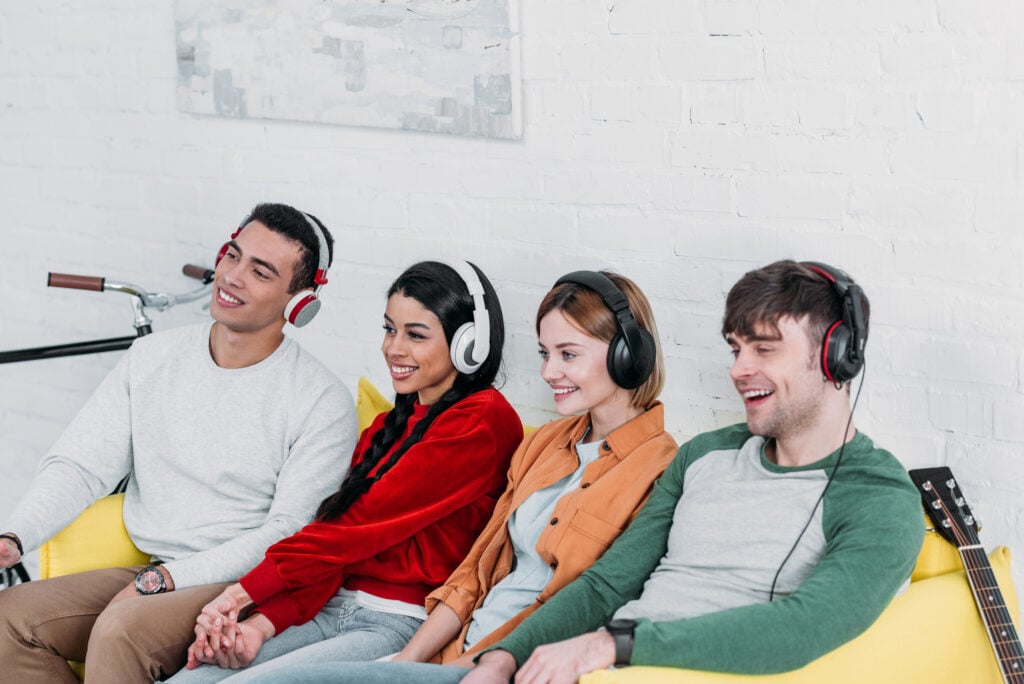
- Audiobooks through NLS BARD. The National Library Service's Braille and Audio Reading Download (BARD) is a free service of the Library of Congress for eligible blind, low-vision, and print-disabled readers. It offers more than 130,000 audio and braille books through a phone app, web download, or mailed cartridge.
- Bookshare. Bookshare is an accessible ebook library with read-aloud, enlarged-text, highlighted, and braille formats. It works on phones, tablets, and computers with a screen reader or refreshable braille display. Membership is free for U.S. students with qualifying disabilities and low-cost for adults.
- Podcasts. Mosen At Large (hosted by Jonathan Mosen), Blind Abilities, Double Tap, the ACB Community podcast, and Tech Doctor are all produced by blind hosts and cover accessible tech, culture, sports, and daily-life topics.
- ACB Radio and ACB Community. The American Council of the Blind runs ACB Radio, an internet radio network with live and on-demand programming, plus ACB Community, a daily calendar of phone and Zoom-based discussion groups, book clubs, trivia nights, and learning sessions.
- Audio-described film, TV, and theater. The ACB Audio Description Project tracks audio-described movies, streaming titles, museum tours, and live theater performances. Netflix, Disney+, Apple TV+, Hulu, and most major streamers ship audio description on a large share of their catalogs.
- Audio games and mainstream titles with accessibility features. Audio-only games like A Hero's Call, Manamon, and Crafting Kingdom are built for blind players. Mainstream titles like The Last of Us Part II, Forza Motorsport, and Mortal Kombat 1 now include screen-reader menus, audio cues, and customizable accessibility settings. AppleVis and the AccessWorld archives track current accessible-game releases.
Physical Activities and Sports
Many sports have organized adaptive leagues and certified instructors. The U.S. Association of Blind Athletes (USABA) is the Olympic and Paralympic certified governing body for blind and low-vision sport in the United States and runs national-level programs across many disciplines.
- Tandem cycling. A sighted captain pilots a two-seat bike with a blind stoker on the back. Local tandem clubs exist in most U.S. metros, and Ski for Light and BOLD (Blind Outdoor Leisure Development) coordinate multi-day rides.
- Goalball and beep baseball. Goalball is a three-on-three indoor sport with a bell-filled ball, played by athletes wearing eyeshades to equalize the field. Beep baseball uses a beeping ball and buzzing bases. Both have local leagues, regional tournaments, and a national championship.
- Running, swimming, and triathlon. Most large running clubs match blind runners with sighted guides; United in Stride is the most-used national matching service. USABA supports swimming and triathlon at the elite and recreational levels.
- Judo, wrestling, and goal-specific Paralympic sports. Judo and wrestling work well for blind athletes because grip starts before motion begins. USABA's roster also includes alpine and Nordic skiing, track and field, powerlifting, and showdown (an adaptive table-tennis variant).
- Hiking, kayaking, and adaptive skiing. Foundation for Blind Children, BOLD, and Ski for Light organize multi-day backcountry trips. Most adaptive ski schools (NSCD, Adaptive Sports Center, Disabled Sports USA) train blind skiers with a verbal-guide instructor.
- Yoga, tai chi, and dance. Verbal-instruction yoga and tai chi classes are widely accessible. Ballroom and salsa partnerships, blind-led drumming circles, and adaptive dance fitness all work without visual demonstration when the teacher narrates clearly.
Creative Activities
- Music. Blind musicians work across every genre, from concert performance to studio production. Hadley offers workshops on accessible music notation and audio production, and many music schools accept blind students who use braille music or memorize by ear.
- Writing. Screen readers (JAWS, NVDA, VoiceOver) and voice dictation make writing a fully accessible craft. Many blind writers also use refreshable braille displays for editing, where reading and writing happen by touch.
- Visual art on tactile terms. Sculpture, mosaic, collage, and textile art all proceed by feel. The Andrew Heiskell Library and several museum education programs run tactile-art workshops; AccessWorld covers accessible art-software tools for low-vision artists.
- Photography. Blind photographers (Pete Eckert and Bruce Hall are the best-known names in the field) compose by sound, memory, and sighted assistance. Smartphone cameras with audio framing cues (including the iPhone's People Detection and Image Description features) make casual photography reasonable for blind users.
- Woodworking, leatherworking, and metalwork. Hadley and several state vocational rehab programs run workshop courses adapted for blind students, with click-stop measuring tools, talking calipers, and tactile templates.
Social Activities and Community
The most-overlooked answer to "what do blind adults do for fun" is the same as for sighted adults: spend time with other people.
- NFB and ACB local chapters. The National Federation of the Blind and American Council of the Blind each have chapters in every U.S. state and many cities, with monthly meetings, social events, and skill-share sessions. NFB also runs annual national conventions of 2,000+ attendees.
- ACB Community programs. ACB's daily Zoom and phone programs include book clubs, trivia, cooking discussions, prayer groups, language exchanges, and a long-running daily check-in. Anyone can join; no membership required.
- Book clubs. BARD-based book clubs, ACB Community book clubs, and accessible-format reading groups meet weekly or monthly on Zoom and phone bridges.
- Travel. Mind's Eye Travel and Traveleyes (UK-based with U.S. trips) run group travel for mixed blind and sighted travelers, with verbal narration built into every excursion. Several mainstream cruise lines also accommodate independent blind travelers with cabin orientation tours and audio-described excursions.
- Faith communities. Most denominations have accessible-format scripture available; NLS distributes audio Bibles and prayer materials, and major publishers offer braille and large-print versions of liturgical and devotional texts.
- Volunteering. ACB and NFB chapters both support volunteer roles (advocacy, peer mentorship, and community outreach) that match a range of experience levels and interests.
Adaptive Tools and Technology
Most modern activities depend on accessible technology more than on specialized hobby equipment. APH ConnectCenter's Assistive Technology resource covers the full landscape; the most common tools are:
- Screen readers. JAWS (Windows), NVDA (free, Windows), and VoiceOver (built into macOS, iOS, and tvOS) read screen content aloud. TalkBack does the same on Android.
- Refreshable braille displays. Pin-based displays render screen text in braille and connect by Bluetooth or USB to a phone or computer. The Orbit Reader, Mantis Q40, and BrailleSense are common models.
- Magnification. Built-in OS magnification (Windows Magnifier, macOS Zoom), handheld and desktop video magnifiers (CCTVs), and apps like Supersense and Seeing AI cover most reading and identification needs for low-vision users.
- AI assistants and human-helper apps. Be My Eyes (free, connects to sighted volunteers and AI), Aira (subscription, connects to trained agents), Seeing AI, and Envision AI describe scenes, read mail, and identify products on demand.
- Wearables and hardware. OrCam MyEye and Envision Glasses read text aloud from a glasses-mounted camera. WeWALK and similar smart-cane attachments add obstacle detection and GPS to a traditional white cane.
- Orientation and mobility training. A certified orientation and mobility (O&M) specialist teaches route planning, cane technique, public-transit navigation, and use of GPS apps like BlindSquare, Soundscape, and Lazarillo. Many blind and low-vision adults find O&M training one of the most useful pieces of their independent-living toolkit. APH ConnectCenter's orientation guide explains what to expect from training.
Activities for Blind Children

Children's programming differs from adult programming mainly in pace and supervision. Perkins School for the Blind, the American Printing House, and FamilyConnect maintain large libraries of age-appropriate activities. The most common categories:
- Tactile and braille games. Braille Twister, tactile Uno, raised-image picture books, and braille building blocks help children develop tactile literacy and braille reading at the same time.
- Music classes. Suzuki-method violin, piano, voice, and drum classes work especially well with blind students because the method begins with listening before reading notation.
- Adaptive sports for kids. USABA's youth programs, NFB BELL Academy (a two-week summer braille and skills program), NFB Camp (childcare during the annual convention), and Camp Abilities (a one-week sports camp held in multiple states) all serve blind children ages 6 to 18.
- Sensory rooms and tactile gardens. Sensory and snoezelen rooms (with lighting, texture walls, vibration platforms, and ambient sound) appear in many schools for blind children. Tactile gardens with raised beds and labeled plants do similar work outdoors.
- APH educational kits. APH publishes pre-braille tactile readiness kits, math manipulatives, science experiment sets, and social-studies materials. Many are free through the Federal Quota program for U.S. students.
- Art projects. Finger painting, clay sculpture, and paper mache let children explore creativity through texture and form. Perkins School for the Blind publishes a library of at-home activities parents can do with blind children using common household materials.
Activities for Blind Seniors
Older adults who lost vision later in life often look for low-impact activities that work with arthritis, hearing changes, or balance issues. Vision rehabilitation services through state and local agencies cover much of the practical adjustment work, and APH ConnectCenter's VisionAware service points seniors to daily-living tips, peer stories, and local resources.
- Tactile board and card games. Braille and large-print playing cards, jumbo dominoes, large-print Scrabble, and tactile chess with magnetic pieces work well for arthritic hands.
- Trivia, audio quizzes, and phone-based games. ACB Community runs daily trivia and word games by phone and Zoom that work without any screen.
- Audio Bibles, devotionals, and audio newspapers. NLS distributes free audio devotional and reading materials. NFB-NEWSLINE provides 500+ newspapers and magazines by phone, smart speaker, and app.
- Chair yoga, seated tai chi, and home exercise. Verbal-instruction fitness programs work well at home. Hadley and several senior-center programs offer free seated workouts adapted for blind and low-vision participants.
- Household tasks. Folding and sorting laundry, washing dishes, and meal prep are meaningful daily activities that many seniors prefer to keep doing independently. Independent-living skills training (part of vision rehabilitation) covers home-management techniques, while O&M training handles safe travel and navigation around the house and beyond.
- Sensory and reminiscence activities. Memory care and adult day programs increasingly include tactile, scent-based, and audio reminiscence activities: handling textured objects, smelling familiar herbs, listening to era-specific music.
Community Resources and Books
The organizations below maintain the bulk of the recreation, learning, and adaptive-equipment infrastructure for blind and low-vision adults in the United States. Most are free to contact and have local chapters or referral networks.
- American Council of the Blind
- American Foundation for the Blind
- National Federation of the Blind
- American Printing House for the Blind
- APH ConnectCenter (VisionAware and FamilyConnect)
- Perkins School for the Blind
- U.S. Association of Blind Athletes
- Hadley
- Lighthouse Guild
- National Library Service for the Blind and Print Disabled (NLS)
- Bookshare
- Learning Ally
- Choice Magazine Listening
- AppleVis
- Be My Eyes
- Foundation Fighting Blindness
- Prevent Blindness
- Start Seeing CVI
Common Access Barriers
Most barriers to activities come from how the activity or venue is designed, not from blindness itself. Reading books, playing video games, traveling, and exercising are all broadly accessible; the gaps are usually environmental rather than inherent.
The most common access issues:
- Inaccessible websites and apps (missing alt text, unlabeled buttons, custom controls that screen readers can't reach)
- Lack of audio description on streaming titles, museum exhibits, and live performances
- Venues without verbal directions, tactile signage, or staff trained on guide-dog and white-cane etiquette
- Mainstream sports leagues that haven't trained guides or sourced adaptive equipment
- Public transit gaps that make it harder to reach a class, league, or event independently
- Group activities run on visual cues without a verbal alternative
Federal disability law, ADA Title III requirements, and Section 508 cover much of the digital and public-venue side. Organizations like NFB, ACB, and the AFB advocacy team regularly publish updated accessibility guidance for venues, employers, and software developers.
Etiquette for Sighted People Meeting Blind or Low-Vision People
NFB's Courtesy Rules of Blindness is the most widely cited etiquette reference in the community. The core points:
- Always talk directly to the blind person, not to a companion, family member, or guide.
- Introduce yourself by name when you walk up; voices are easier to recognize when you hear them attached to a name first.
- Acknowledge people by name when they enter a room. A general "hi everybody" does not tell a blind person who is present.
- Ask before offering help. "Would you like a guided arm to the door?" works better than grabbing an elbow.
- Speak at a normal pace and volume. Blindness does not affect hearing.
- Use concrete spatial language. "The coffee is at two o'clock, about a foot from your right hand" beats "it's right there."
- Do not assume what someone can or can't do. Ask, or wait for them to mention a preference.
- Say goodbye before walking away. Trailing off mid-conversation leaves a blind person talking to no one.
- When acting as a sighted guide, offer your arm and narrate changes in terrain, stairs, doorways, and turns.
- Introduce people by name before mentioning anything else about them. Most blind adults do not need a disability descriptor to be introduced.
Summary
Blind and low-vision adults pursue the same range of activities as sighted adults (sensory crafts, sports, music, social events, travel) with adaptive tools and community resources for each. Organizations like the National Federation of the Blind, American Council of the Blind, U.S. Association of Blind Athletes, APH ConnectCenter, and Hadley maintain directories of local chapters, sports leagues, recreation programs, and free workshops. Most barriers to activities come from how venues, websites, and equipment are designed rather than from blindness itself, and the access gaps shrink every year as accessibility tooling improves. If you or someone you know is newly adjusting to vision loss, start with an eye-care professional for diagnosis, treatment options, and a vision-rehabilitation referral; APH ConnectCenter's VisionAware service and an NFB or ACB local chapter are strong next stops for daily-living tips and community.