

Ski goggles do more than shield your eyes from wind and snow. The best pairs help you read terrain faster, stay clearer in flat light, and feel comfortable enough that you forget about them once you start skiing.
That is why this category works best as a ranked shopping guide, not just a general explainer. Different goggles solve different problems, and the right choice depends on how you ski, what weather you see most, and whether you need room for prescription glasses.
Why trust us
We compared established ski goggle brands, looked at lens systems, ventilation, fit categories, and glasses compatibility, and favored models with a clear use case instead of vague “best for everyone” claims.
We also weighed price as part of the recommendation. A premium goggle can be worth it, but only if you actually benefit from the optics and fit improvements.
Where to Buy Glasses + Contacts
Best Overall: Warby Parker
Fastest Delivery: EyeBuyDirect
Also Great: The Framery
Best Place to Buy Contacts: GlassesUSA
Best ski goggles
Everything We Recommend
| Everything We Recommend | |
|---|---|
| Best overall - | Smith 4D MAG Price: $348 on Amazon |
| Best for peripheral vision - | Giro Contour Goggle Price: $188.65 on Amazon |
| Best anti-fog performance - | Salomon Radium Pro Sigma Price: Pricing varies on Amazon |
| Best impact-minded design - | POC Nexal Clarity Goggles Price: Pricing varies on Amazon |
| Best for prescription wearers - | Bollé Supreme OTG Price: $99.95 on Amazon |
| Best open field of view - | Oakley Flight Deck L Snow Goggles Price: $225 on Amazon |
| Best fit and comfort - | Smith I O MAG Price: $283 on Amazon |
| Best value pick - | SunGod Vanguards |
Smith 4D MAG
Smith 4D MAG is still the easiest top recommendation because it blends strong optics, easy lens changes, and a premium on-face feel. If you ski often and want one pair that can justify a higher spend, this is the clearest all-around answer.
The main reason to buy it is simple: visibility feels premium, and the design does not make many compromises.
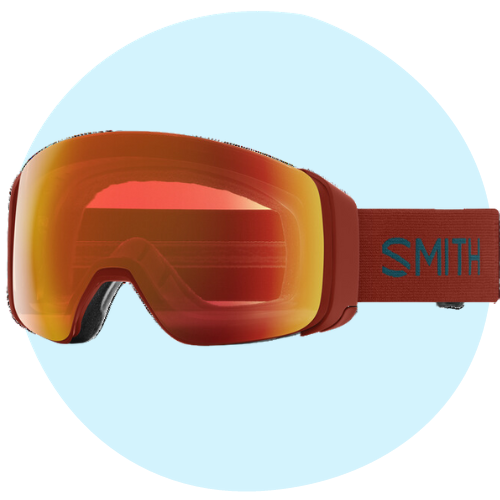
Key features include:
- Magnetic lens-change system
- ChromaPop lens options for contrast
- Wide strap and comfortable face foam
- Strong overall weather versatility
Pros
- Excellent optics and contrast
- Easy lens swapping
- Comfortable for long days on the mountain
Cons
- Expensive upfront
- Spare lenses can add a lot to the total cost
Price: $348 on Amazon
Giro Contour Goggle
Giro Contour is the better choice if you want a wide view without an oversized feel. It is especially useful for skiers who want a sleeker goggle that still feels premium in changing light.
This is the pick for people who care about field of view but do not want the largest frame in the category.
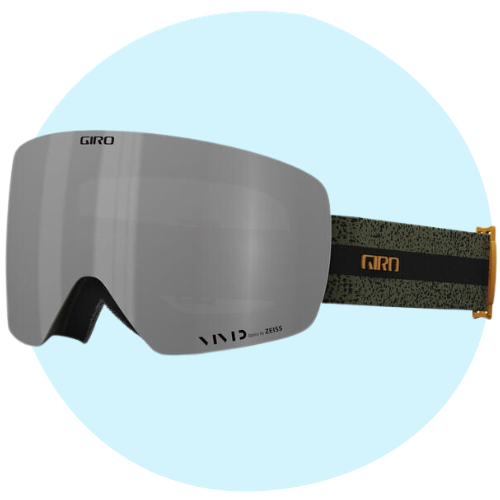
Key features include:
- Toric lens shape
- Expansion View design
- EVAK venting for airflow
- Frameless look with strong helmet integration
Pros
- Very good peripheral awareness
- Clean low-profile appearance
- Strong optics for the size
Cons
- Extra lenses are pricey
- Fit can feel large on smaller faces
Price: $188.65 on Amazon
Salomon Radium Pro Sigma
Salomon Radium Pro Sigma makes the most sense if fog resistance is your top concern. It is a strong option for skiers who deal with wet weather, repeated lift stops, or lots of temperature changes through the day.
It is not the flashiest goggle in the group, but it solves a practical problem better than most.
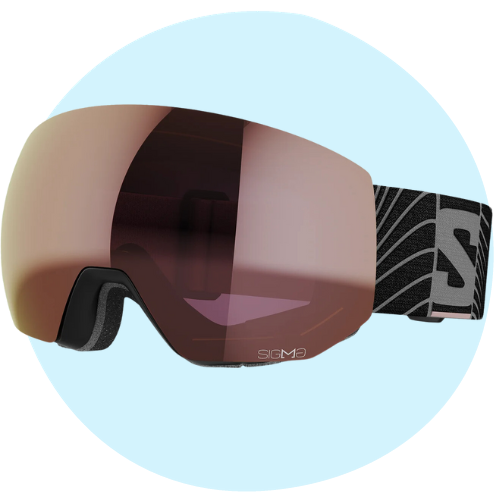
Key features include:
- Quick lens-change system
- Spherical lens design
- Strong anti-fog treatment
- Good value relative to other premium models
Pros
- Very strong ventilation
- Good contrast for the price
- Usually cheaper than top-tier flagships
Cons
- Fit can be less universal
- Some users may want more premium finishing
Price: Pricing varies on Amazon
POC Nexal Clarity Goggles
POC Nexal Clarity is the right choice if you want a more protective feel and a slightly more technical design language. It stands out for skiers who want comfort plus a confidence-inspiring build.
It is not the value option, but it feels purpose-built and substantial.
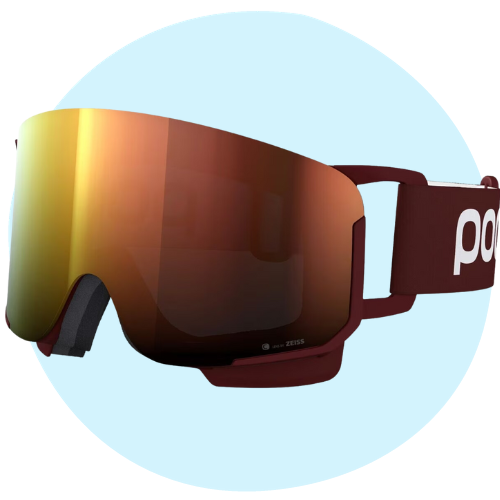
Key features include:
- Triple-layer face foam
- Clarity lens system
- Venting controls
- Design elements built around impact-minded protection
Pros
- Comfortable face seal
- Premium construction
- Distinctive technical design
Cons
- Price can be high
- Lens ecosystem is less broad than some rivals
Price: Pricing varies on Amazon
Bollé Supreme OTG
Bollé Supreme OTG is the practical answer for skiers who wear prescription glasses under their goggles. OTG models are rarely the most stylish pick, but this one handles the job better than trying to force a standard frame over your everyday glasses.
If you ski in glasses often, this is one of the easiest recommendations on the page.
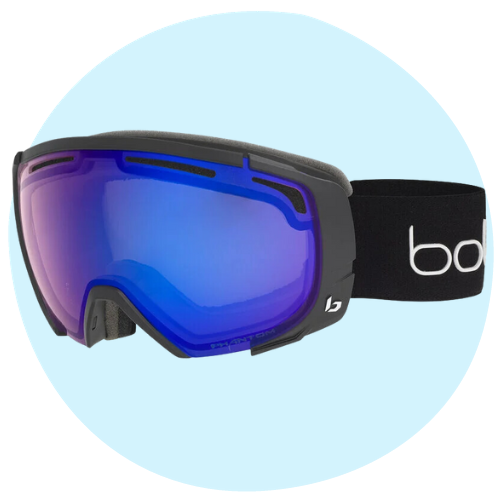
Key features include:
- Over-the-glasses fit
- Anti-fog design
- Comfortable fleece-lined foam
- Scratch-resistant lens coating
Pros
- Built for prescription-glasses compatibility
- Comfortable for full-day wear
- Easier than improvising with standard goggles
Cons
- Bulkier than non-OTG models
- Style is secondary to function
Price: $99.95 on Amazon
Oakley Flight Deck L
Oakley Flight Deck L is the best choice if you want the most open visual feel possible. The large frameless design is what draws people in, and it is especially attractive if you dislike feeling boxed in by the frame edge.
This is a very good option for skiers who prioritize peripheral awareness over a lower-profile fit.
Key features include:
- Large frameless lens shape
- Wide field of view
- Strong lens tech and contrast options
- Distinctive helmet-friendly silhouette
Pros
- Very open visual feel
- Strong brand lens reputation
- Great for skiers who like large goggles
Cons
- Can feel oversized on some faces
- Premium pricing
Price: $225 on Amazon
Smith I O MAG
Smith I O MAG is the comfort-first recommendation. It is the pair to look at if you want premium Smith optics in a package many skiers find easier to wear for a full day than more dramatic flagship frames.
It is not as visually aggressive as the 4D MAG, which is exactly why some buyers prefer it.
Key features include:
- Magnetic interchangeable lenses
- Comfortable fit across many face shapes
- Reliable ventilation
- Strong all-day wearability
Pros
- Excellent fit and comfort
- Premium lens performance
- Easier to live with than some oversized models
Cons
- Still expensive
- Not as eye-catching as category flagships
Price: $283 on Amazon
SunGod Vanguards
SunGod Vanguards are the value recommendation because they give you interchangeable-lens flexibility and a more approachable price than many flagship goggles. They are best for regular recreational skiers who still care about optics but do not want to spend at the top of the category.
This is the goggle for someone who wants strong value, not the most famous logo.
Pros
- Better value than many premium competitors
- Clean modern styling
- Good choice for budget-aware regular skiers
Cons
- Less established legacy reputation
- May not match top-tier optics for demanding users
How we chose
We favored goggles with clear roles instead of filling the list with near-duplicates. Optics, anti-fog performance, fit, OTG compatibility, and price-to-value were the main factors.
We also avoided pretending that every skier should buy the most expensive pair. A strong value goggle can be a smarter choice than a flagship if it fits your actual use.
Which pair is right for you
Choose Smith 4D MAG if you want the strongest all-around premium pick. Choose Giro Contour if you want a sleeker fit, Salomon Radium Pro Sigma if fogging frustrates you, and Oakley Flight Deck L if peripheral openness is the whole point.
Choose Bollé Supreme OTG if you wear glasses, Smith I O MAG if comfort matters most, and SunGod Vanguards if you want better value without dropping to bargain-bin gear.
Summary
The best ski goggles are the ones that match how you ski, not just what looks impressive online. Smith 4D MAG remains the strongest overall recommendation, but Giro, Salomon, Oakley, Bollé, POC, Smith I O MAG, and SunGod all stand out for specific reasons.
If you are shopping seriously, start with fit, weather, and whether you need OTG compatibility. Those factors will shape your day on the mountain more than any marketing phrase on the box.