


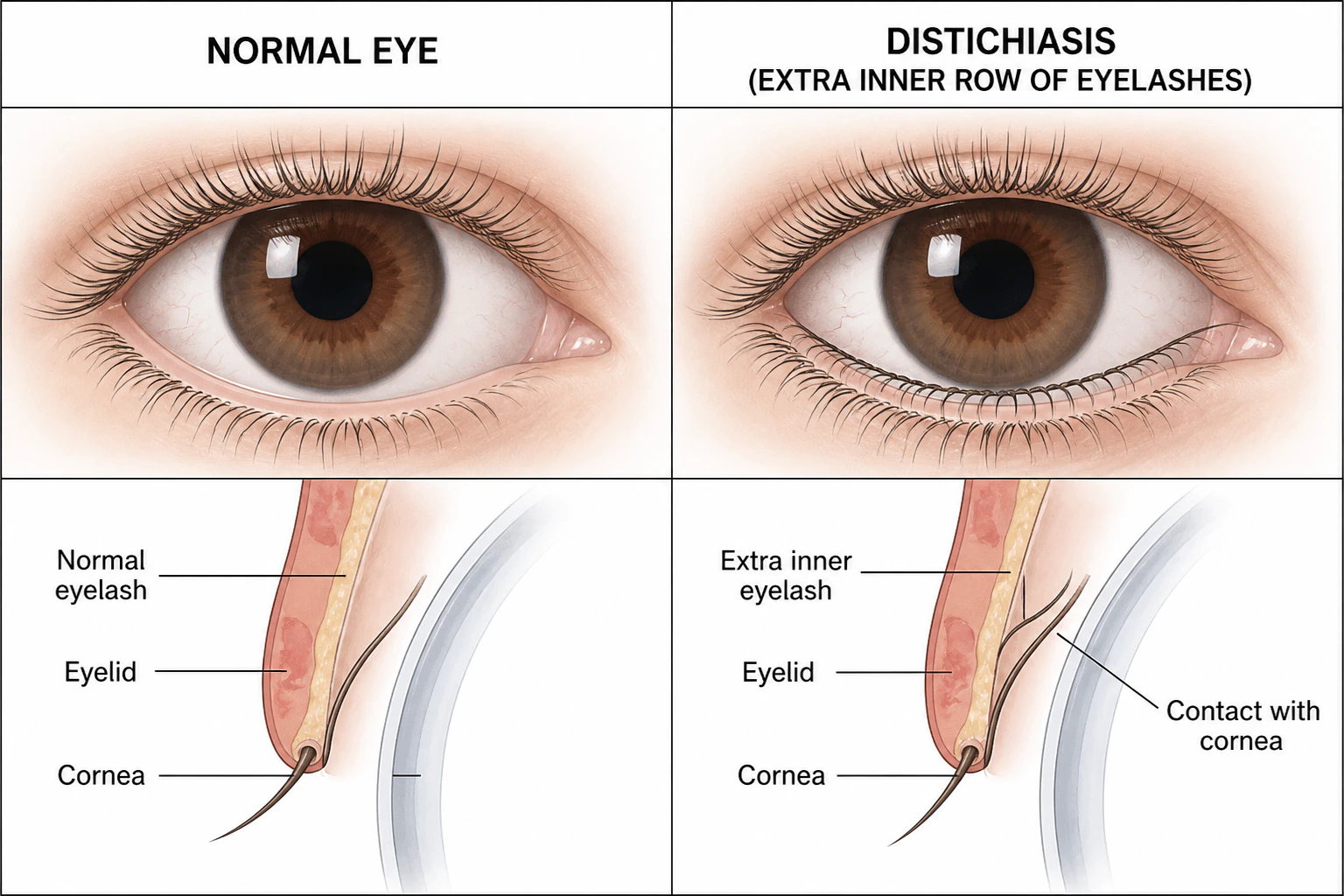
Double eyelashes (known clinically as distichiasis) is a condition where an extra row of lashes grows out of the oil glands inside your eyelid, instead of along the normal lash line. Most cases are harmless and cosmetic. In some people, the extra lashes turn inward and rub against the eye, causing irritation, redness, and (rarely) vision problems.
Distichiasis can be present from birth or develop later from eyelid inflammation, autoimmune disease, or scarring. It is different from trichiasis, where normal-position lashes grow in the wrong direction toward the eye.
This article covers what causes distichiasis, the symptoms that warrant an eye exam, and the treatments that range from in-office plucking to surgical lash removal.
Listen In Q&A Format
Double Eyelashes (Distichiasis) - Causes \u0026 Treatments
Vision Center Podcast
Quick Answers About Double Eyelashes
What's the difference between distichiasis and trichiasis?
Distichiasis is an extra row of eyelashes growing from inside the eyelid, out of the Meibomian gland openings. Trichiasis is when normal-position eyelashes grow in the wrong direction and rub against the eye. Distichiasis is a structural problem; trichiasis is a direction problem. Both can cause irritation, but they are treated differently.
How do you pronounce distichiasis?
Distichiasis is pronounced dis-tih-KYE-uh-sis. The "ch" is silent. The word comes from the Greek distichos, meaning "double row."
What celebrity had distichiasis?
Actress Elizabeth Taylor is widely reported to have had distichiasis. Her unusually thick lash line (often mistaken for stage makeup) has long been attributed to a double row of eyelashes.
Is it normal to have double eyelashes?
True distichiasis is uncommon. The inherited form is estimated to affect about 1 in 10,000 people. Many cases cause no symptoms at all, and people with mild distichiasis often go their whole lives without knowing they have it.
How rare is having double eyelashes?
Congenital distichiasis (the inherited form) is estimated to affect about 1 in 10,000 people. Acquired distichiasis can develop later from chronic eyelid inflammation, scarring, autoimmune disease, or trauma. How often that happens is not well established.
Does distichiasis hurt?
Most people with distichiasis have no pain. The extra lashes are soft and may never touch the cornea. Pain happens when the extra lashes turn inward and rub against the eye, causing irritation, watering, and the feeling of something stuck under the eyelid.
Signs and Symptoms of Double Eyelashes
The most obvious sign of distichiasis is a second row of eyelashes growing out of the inside edge of your eyelid, where the Meibomian glands sit. These extra lashes are usually finer, shorter, and softer than your normal lashes, which is why they can be hard to spot without magnification.
Symptoms depend on how many extra lashes you have and which direction they grow. Some people notice nothing more than a thicker-looking lash line. Others experience irritation that drives them to an eye doctor for the first time.
Common symptoms of distichiasis include:
- A thick or doubled lash line (often the only sign)
- Extra eyelashes above or below the normal lash line
- A sensation of something in the eye (foreign-body feeling)
- Eye irritation or redness
- Watery eyes
- Eye pain, especially with blinking
- Irritated or swollen eyelids
- Eye inflammation or bacterial infection
- Blurry vision
- Corneal abrasion (a scratch on the surface of the eye)
- Vision loss (rare, only in severe untreated cases)
If lashes touch the cornea over time, they can scratch the surface of the eye and lead to infection or scarring. Vision impairment is rare but possible without treatment.
Causes and Risk Factors for Distichiasis
Distichiasis is either congenital (present from birth, usually genetic) or acquired later in life from eyelid inflammation, autoimmune disease, or scarring. Acquired distichiasis develops when chronic irritation causes the Meibomian glands to change and grow hair where they shouldn't.
1. Blepharitis
Blepharitis is a common inflammation of the eyelids that affects the lash follicles. Long-standing blepharitis disturbs the Meibomian glands and is one of the most common triggers of acquired distichiasis.
2. Certain Autoimmune Diseases
Stevens-Johnson syndrome is a rare but serious skin and mucous-membrane reaction, usually triggered by certain medicines, that can involve the eyes. The conjunctival scarring it leaves behind sometimes causes lashes to grow from abnormal sites.
Ocular cicatricial pemphigoid is another autoimmune disorder. It scars the conjunctiva and inflames the eyelid margin. Over time, that scarring can push the Meibomian glands to grow lashes from their oil-gland openings instead of producing oil.
3. Meibomian Gland Dysfunction
The Meibomian glands lubricate your eyes. When chronic inflammation damages these glands, they sometimes de-differentiate and grow lashes; the structural change behind much of acquired distichiasis.
4. Ocular Rosacea
Ocular rosacea is a common condition (especially in people with skin rosacea) that inflames the eyelid margin and disrupts the Meibomian glands. Long-standing ocular rosacea is another acquired-distichiasis trigger.
5. Lymphedema-Distichiasis Syndrome
Lymphedema-distichiasis syndrome is a rare genetic disorder caused by mutations in the FOXC2 gene. It can cause lymphedema (swelling that usually affects the legs and feet), though when it starts and how severe it gets varies from person to person. Roughly 94% of affected people develop distichiasis, often as the earliest sign of the syndrome.
How Is Distichiasis Diagnosed?
An eye doctor diagnoses distichiasis using a slit-lamp exam: a magnified microscope view of the eyelid edge that reveals the extra lashes growing from the Meibomian gland openings. These lashes are often too fine to see without magnification, which is why distichiasis is sometimes missed during a routine vision check.
During the exam, your doctor will also check for signs that the extra lashes are touching the cornea, and look for the underlying inflammation that may be driving acquired cases.
Treatment for Double Eyelashes
Distichiasis treatment ranges from in-office epilation (plucking) for mild cases to electrolysis, cryoablation, or surgery for cases that damage the cornea. Treatment choice depends on how many lashes are misdirected and whether they are causing eye damage. The most common options are:
- Epilation. Manual plucking of the extra lashes. It is the simplest option, but lashes grow back within a few weeks, so epilation is rarely a long-term solution.
- Electrolysis. A small electric current targets the hair follicle to reduce regrowth. Repeat sessions are sometimes needed, and it works best for a small number of misdirected lashes.
- Cryoablation. Extreme cold (delivered as freezing gas) destroys the hair follicles that produce the extra lashes. Used when many lashes are involved.
- Bandage contact lens. A soft contact lens worn temporarily to protect the cornea from inward-growing lashes while it heals or while another treatment is planned.
- Lid-splitting surgery. A surgeon separates the eyelid into layers and removes the abnormal lash roots. Reserved for severe or recurrent cases.
To treat any infections caused by distichiasis, an eye care doctor may also prescribe antibiotic eye drops.
Home Remedies for Double Eyelashes
Home remedies do not cure distichiasis, but they ease the irritation that misdirected lashes cause day to day.
- Warm compresses. Apply to closed eyes for 5 to 10 minutes, twice a day, to soothe lash-related irritation and support Meibomian gland flow.
- Artificial tears. Use over-the-counter lubricating eye drops to flush irritated eyes and reduce the foreign-body sensation.
- Lubricating eye ointment. Apply a thin layer of preservative-free ointment at bedtime to reduce overnight friction from misdirected lashes.
When to See an Eye Doctor
See an eye doctor if your double eyelashes cause symptoms that don't resolve on their own. Distichiasis is usually straightforward to diagnose and treat, but a misdirected lash that touches the cornea can scratch it and raise the risk of infection.
Schedule an exam if you have:
- A constant scratchy or sandy feeling in your eye: The lashes may be turning inward
- Watery eyes that don't resolve with artificial tears
- Eye pain when blinking or new sensitivity to light
- Any vision changes (blurring, halos, or spots) that could signal a corneal abrasion
If you wear contact lenses, see an eye doctor sooner; distichiasis raises the risk of corneal infection in contact-lens wearers.
Can You Prevent Distichiasis?
You cannot prevent congenital distichiasis; it is genetic. You can reduce your risk of acquired distichiasis by treating chronic blepharitis early, keeping up lid hygiene if you have rosacea, and seeking prompt care for any chemical or thermal eye injury that affects the eyelid margin.
A thorough eye exam with slit-lamp magnification is the best way to spot subtle extra lashes and catch corneal irritation before it causes lasting damage.
Summary
Distichiasis is the medical name for double eyelashes: an extra row of lashes growing out of the oil glands inside the eyelid. Most cases are harmless, but lashes that turn inward can scratch the cornea and cause infection or vision loss if left untreated. Treatment ranges from simple epilation for mild cases to electrolysis, cryoablation, or lid-splitting surgery for severe ones. If your extra lashes cause pain, watering, or vision changes, schedule an eye exam. Distichiasis is straightforward to diagnose with a slit-lamp exam, and most cases respond well to treatment.