

What Is a Swollen Eyelid?
A swollen eyelid is puffiness, fluid buildup, or inflammation in the thin skin around your eye. Most cases trace back to one of a few common causes: a stye, a chalazion, an allergic reaction, or pink eye. Severe or sudden swelling (especially with pain, fever, or vision changes) points to an infection or other medical problem that needs same-day care.
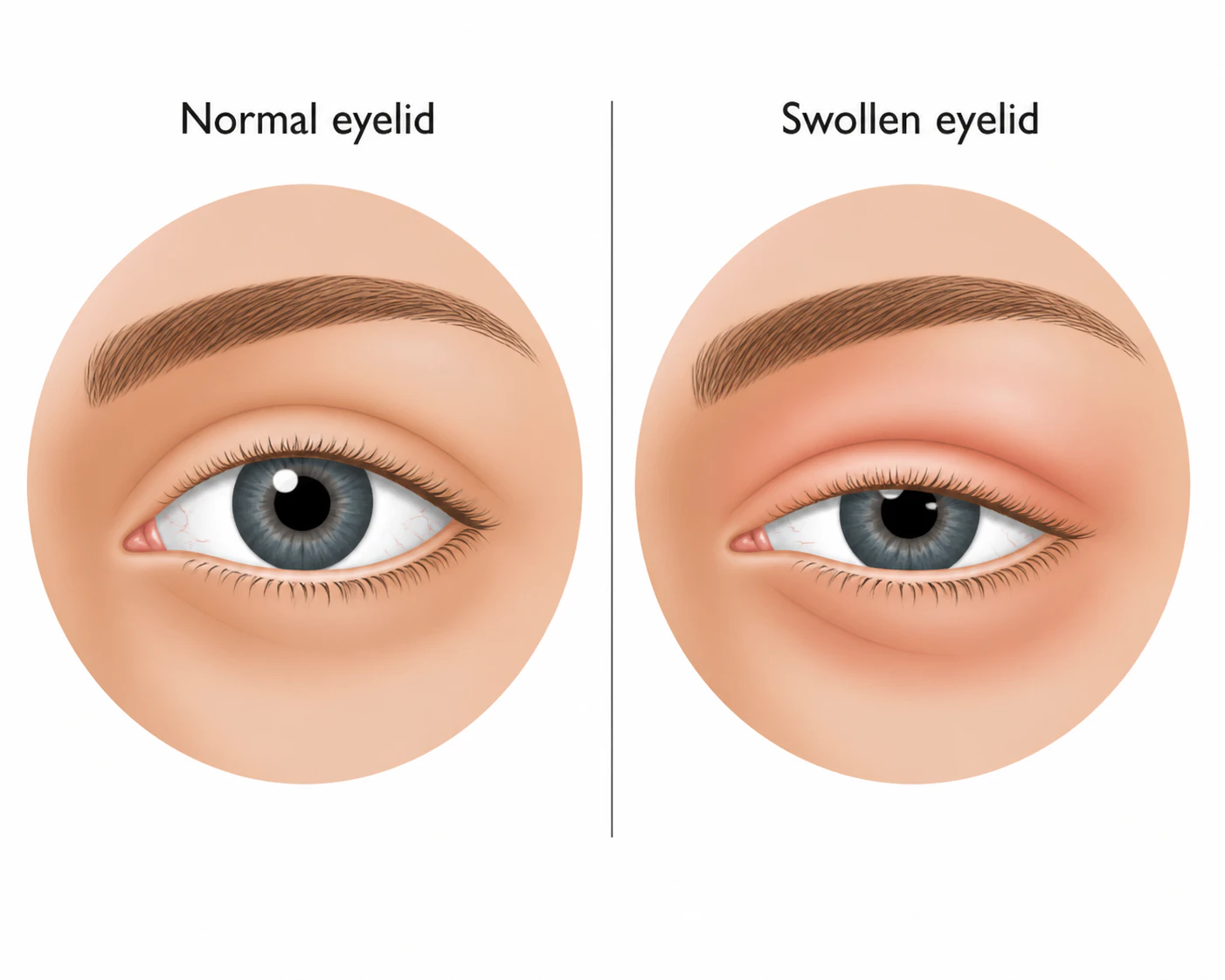
Swelling shows up in one eye or both, in the upper or lower lid, and often comes with redness, itching, discharge, or eye irritation. The pattern of symptoms is the fastest way to figure out the cause.
When to See a Doctor
Go to the emergency room the same day if your swollen eyelid comes with any of these red flags:
- Sudden vision loss or blurry vision that does not clear
- Pain when moving the eye, or trouble moving the eye normally
- Sudden severe swelling, fever, or a bulging eye (possible orbital cellulitis)
- Swelling after a head injury or blow to the eye
- A chemical splash in the eye: flush the eye right away with clean, lukewarm water for at least 20 minutes, remove contact lenses if you are wearing them, then get to the ER
- A foreign object stuck in the eye: do not rub or try to pull it out; cover the eye lightly and go to the ER
- Bilateral eyelid swelling with shortness of breath, facial swelling, or trouble breathing (possible anaphylaxis; use an epinephrine auto-injector right away if you have one and call 911)
- Severe headache with stiff neck or high fever (possible meningitis or cavernous sinus thrombosis)
- A swollen eyelid in an infant or young child with fever (always evaluate same day)
Call an eye doctor within a few days if swelling lasts more than 48 hours, keeps coming back, or does not improve with home care.
How to Tell What's Causing Your Swollen Eyelid
Most swollen eyelids fall into one of a few patterns. Use this table to figure out which cause is most likely, then jump to the matching section below.
| Pattern | Most likely cause | Where to read next |
|---|---|---|
| One eye, painless lump on the lid | Chalazion, a clogged oil gland | Chalazion section below |
| One eye, painful red bump near the lash line | Stye, an infected eyelash follicle | Stye section below |
| One or both eyes, redness with discharge | Pink eye (conjunctivitis). If you wear contacts or have eye pain, light sensitivity, or blurred vision, remove your lenses and call an eye doctor today | Pink eye section below |
| Both eyes, itchy and watery | Allergic reaction or eye allergies | Eye allergies section below |
| Sudden severe swelling, fever, pain on eye movement | Orbital cellulitis. Go to the ER | When to See a Doctor (above) |
| Both eyes, chronic plus scaly eyelid edges | Blepharitis | Blepharitis section below |
| Both eyes, bulging or "puffy from behind" | Graves' disease, thyroid-related | Graves section below |
| Both eyes, worse in the morning, no pain | Fluid retention, fatigue, or high-salt diet | Lifestyle causes below |
The table covers the eight patterns that account for most cases. If your swelling does not match any of them, or you have any of the red-flag symptoms above, see an eye doctor.
Common Causes of Swollen Eyelids
Eye Allergies
Allergic reactions release histamine, which inflames the thin eyelid skin and causes itching, redness, swelling, and watery eyes. Triggers include pollen, pet dander, dust, smoke, fragrances, and makeup or skin care products. Both eyes are usually affected.
Most cases respond to cool compresses, artificial tears, and over-the-counter antihistamines. Prescription eye drops or oral allergy medications help when symptoms persist.
Pink Eye (Conjunctivitis)
Pink eye is inflammation of the conjunctiva (the clear tissue covering the white of your eye) from a viral, bacterial, or allergic trigger. Common signs include pink or red eyes, discharge or crusting, and itchiness. If you wear contact lenses, take them out at the first sign of redness or discharge and call your eye doctor the same day; contact-lens wearers are at higher risk for serious corneal infections that look like pink eye at first. See our full pink eye guide for symptoms, treatment, and how to tell viral from bacterial.
Stye
A stye (hordeolum) is a tender red bump near the lash line, caused by inflammation of an eyelash follicle. It looks like a small pimple and usually affects one eye. Warm compresses several times a day are the standard home treatment. Most styes start to improve after a few days and fully resolve within one to two weeks. See your eye doctor if a stye lasts more than two weeks or worsens.
Chalazion
A chalazion is a painless, firm lump in the upper or lower eyelid caused by a clogged oil gland. It swells the entire lid in some cases, even when the lump itself is small. Warm compresses and gentle eyelid massage clear most chalazia, though resolution takes weeks. Persistent lumps may need an in-office drainage procedure.
Blepharitis
Blepharitis is chronic inflammation of the eyelid margins, often with flaking, crusting, and gritty irritation in both eyes. It is typically driven by an overgrowth of normal eyelid bacteria or by clogged oil glands.
Daily eyelid hygiene (warm compresses, gentle lid scrubs, and washing the lash line with a clean cloth) is the foundation of treatment. Topical antibiotics or steroids are added when symptoms are severe.
Ocular Herpes
Ocular herpes usually refers to a herpes simplex virus infection of the eye or eyelid. Signs include painful sores, redness, swelling, and crusted lids stuck together in the morning. Antiviral medications are the standard treatment. Steroid drops are used only for selected deeper or inflammatory cases under an ophthalmologist's care. See an eye doctor right away if you suspect ocular herpes; untreated infection can scar the cornea.
A shingles rash or blisters on the forehead, upper eyelid, or around one eye is a separate but equally urgent threat: shingles near the eye threatens vision, and early antiviral treatment reduces that risk. Get same-day care for any shingles rash near your eye.
Graves' Disease
Graves' disease is an autoimmune thyroid condition that can swell the muscles and tissues behind the eyes, pushing the eyeballs forward and puffing the lids. Both eyes are usually affected, often unevenly. Treatment depends on severity and may include lubricating drops, oral steroids, FDA-approved Tepezza (teprotumumab), radiation therapy, or orbital decompression surgery.
Eye Trauma
Blunt injury, burns, chemical splashes, and foreign objects can all swell the eyelid. A black eye, for example, is bruising and swelling from a blow to the face. Any eye injury should be examined by a healthcare professional to rule out damage to the eye itself.
Cellulitis
Eyelid cellulitis is a bacterial infection that needs urgent care. There are two forms:
- Preseptal (periorbital) cellulitis: An infection of the eyelid skin in front of the eye. The lid is red, swollen, and warm, but eye movement is normal.
- Orbital cellulitis: A deeper infection behind the eye, often spreading from a sinus infection. Signs include a bulging eye, pain on eye movement, fever, and double vision or blurry vision.
Orbital cellulitis is a medical emergency. Go to the ER, where treatment is intravenous antibiotics in a hospital setting. Preseptal cellulitis is treated with oral antibiotics under a doctor's care; close monitoring is essential because it can progress.
Lifestyle Causes: Fatigue, Salt, and Fluid Retention
Mild morning puffiness in both eyes is usually a benign mix of lack of sleep, a salty meal the night before, or normal overnight fluid pooling. Cold compresses, elevating your head while you sleep, and getting 7 to 9 hours of rest typically clear it within a day.
Persistent eyelid swelling in both eyes that does not improve with rest can be a sign of an underlying condition such as heart, kidney, or liver disease, or a thyroid problem. See your doctor if puffiness sticks around or comes with other symptoms.
Eye Cancer (Rare)
Eye cancers are uncommon, but they can cause eyelid swelling, a persistent or growing lump on the lid, a bulging eye, or vision changes. Basal cell carcinoma is the most common eyelid cancer. Sebaceous carcinoma is worth knowing about because it mimics a stubborn stye or chalazion that does not clear. Squamous cell carcinoma, ocular melanoma, and lymphoma also affect the eye area in rarer cases. See an eye doctor for any non-healing eyelid lesion, a lump that keeps growing, or persistent unexplained swelling.
Home Remedies for Mild Swelling
Most mild eyelid swelling clears with simple home care:
- Gently clean the eyelid with water and a mild baby shampoo, then pat dry
- Use artificial tears to rinse and lubricate the eye
- Apply a cool compress or a towel-wrapped cold pack for 10 to 15 minutes, two or three times a day; do not place ice directly on the eyelid or press on the eye
- Use a warm compress for styes, chalazia, or blepharitis (heat helps unclog glands; cold is better for allergies and injuries)
- Sleep with your head elevated to drain fluid away from the eyes
- Skip contact lenses and eye makeup until the swelling resolves
When Home Care Isn't Enough: Medical Treatments
Most mild eyelid swelling clears with compresses, eyelid hygiene, and rest. Medical treatment is needed when symptoms persist beyond 48 hours, become severe, or include vision changes. Depending on the cause, an eye doctor may prescribe:
- Antihistamines or allergy shots: For allergic swelling
- Antibiotic eye drops or ointments: For bacterial infections including some cases of blepharitis and stubborn styes
- Antiviral medications: For ocular herpes
- Corticosteroids: To reduce inflammation in selected cases
- Incision and drainage: For chalazia or styes that do not resolve with conservative care
- IV antibiotics: For orbital cellulitis, administered in a hospital
- Epinephrine: The first-line emergency treatment for anaphylaxis; use an epinephrine auto-injector right away if you have one and call 911
- Surgery: To remove foreign objects, tumors, or growths
How to Prevent Eyelid Swelling
You can reduce your risk of swollen eyelids by managing allergies, practicing eyelid hygiene, and replacing irritating cosmetics. Here is what eye-care professionals recommend:
- Treat allergies and avoid known triggers
- Wash hands with soap and warm water before touching your eyes
- Use hypoallergenic or fragrance-free makeup and skin care products, and replace eye makeup every three months
- Clean the lash line nightly if you have recurring styes, chalazia, or blepharitis
- See your eye doctor for regular checkups
- Handle your contact lenses with care and never sleep in lenses that are not approved for it
Key Takeaways
- Most swollen eyelids come from a stye, chalazion, allergic reaction, or pink eye. Allergy and fluid-related puffiness usually eases within 24 to 48 hours; styes and chalazia respond to warm compresses and resolve over days to weeks.
- Use the differential table above to figure out which condition you most likely have, then deep-link to the dedicated guide for treatment detail.
- Go to the ER the same day for sudden vision loss, severe headache with fever, painful eye movements, swelling after head trauma, anaphylaxis-pattern bilateral swelling, a chemical splash (flush first), a foreign object in the eye, or a swollen eyelid in a young child with fever.
- See an eye doctor within a few days for swelling that lasts more than 48 hours, recurs frequently, or does not improve with home care, and the same day if you wear contact lenses and have redness with discharge, eye pain, light sensitivity, or blurred vision.